
Someone had to actually sit down and write that review. To do it, they needed a Google account, and every account leaves a trail. An age. A history. A pattern of what it’s posted and where.
That’s public information, sitting there for anyone who looks. Which is exactly why most business owners end up arguing with what a review says instead of checking where it actually came from.
You can’t prove a bad meal never happened. But you can show the account describing it was created eleven days ago, left four one-star reviews in one afternoon across four unrelated businesses, and hasn’t posted a single thing since. That’s not an opinion. That’s a pattern, and Google acts on patterns, not disagreements.
Erase Trax trace the account behind a review, write up exactly what it shows, and file the case with real evidence, aimed at proving the review breaks a rule rather than arguing it feels unfair.
Send us the review and we’ll tell you what the account shows.
All inquiries responded within 24 hours
An account made days before it reviewed you, with nothing posted before or since, is one of the clearest red flags there is.
Four negative reviews in six minutes isn't someone recalling their week. It's someone working through a list.
When the same handful of accounts leave you a one-star and a rival a glowing five-star, that pattern is visible in the data and matters a lot to a case.
An account whose entire history sits in a different province, suddenly leaving a review for a shop it never visited.
The exact same wording showing up across several unrelated listings, sometimes with only the business name swapped.
No booking, invoice, or work order matching the date or service described. This is the one piece only you can supply, and it often closes the case.
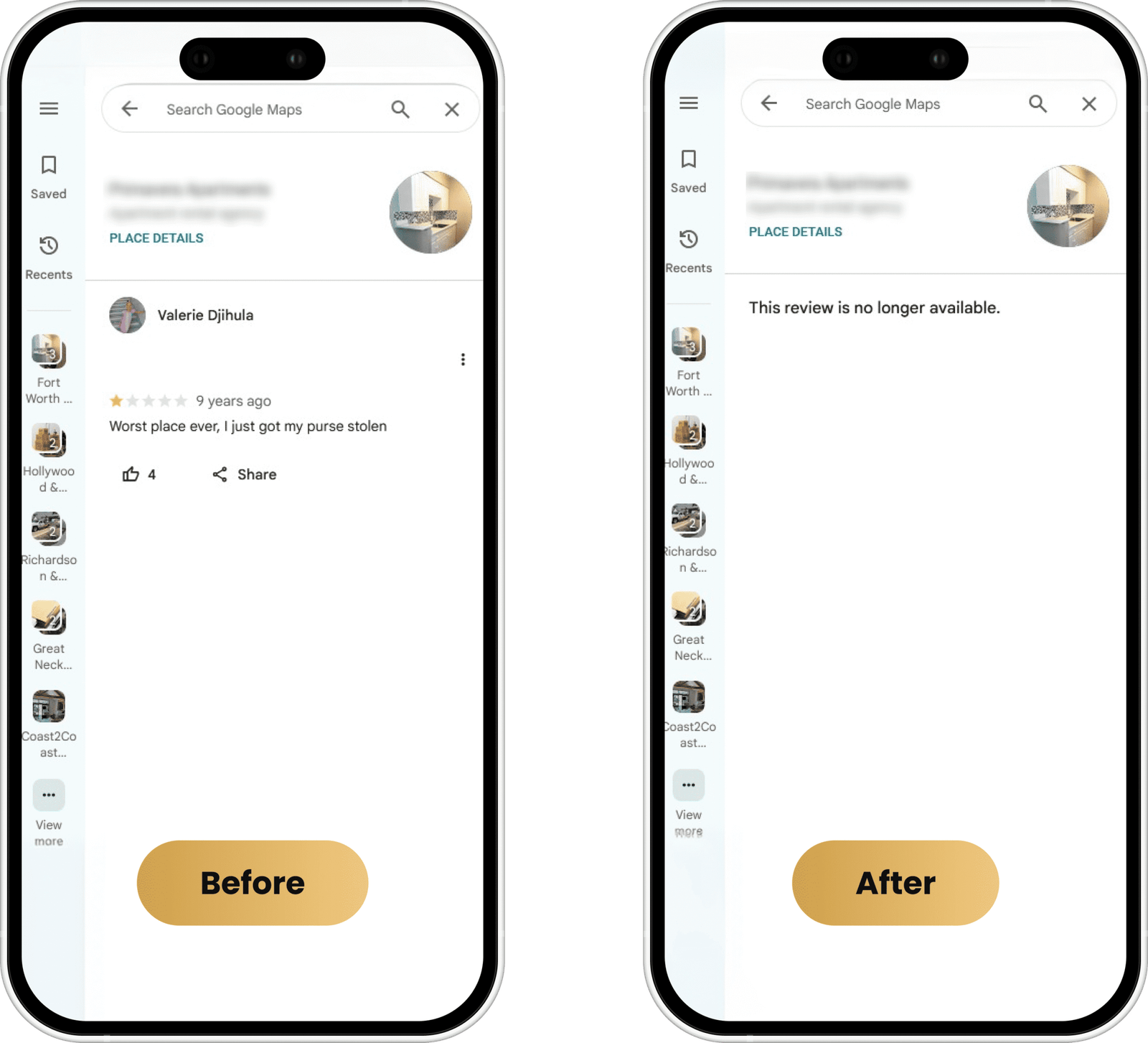
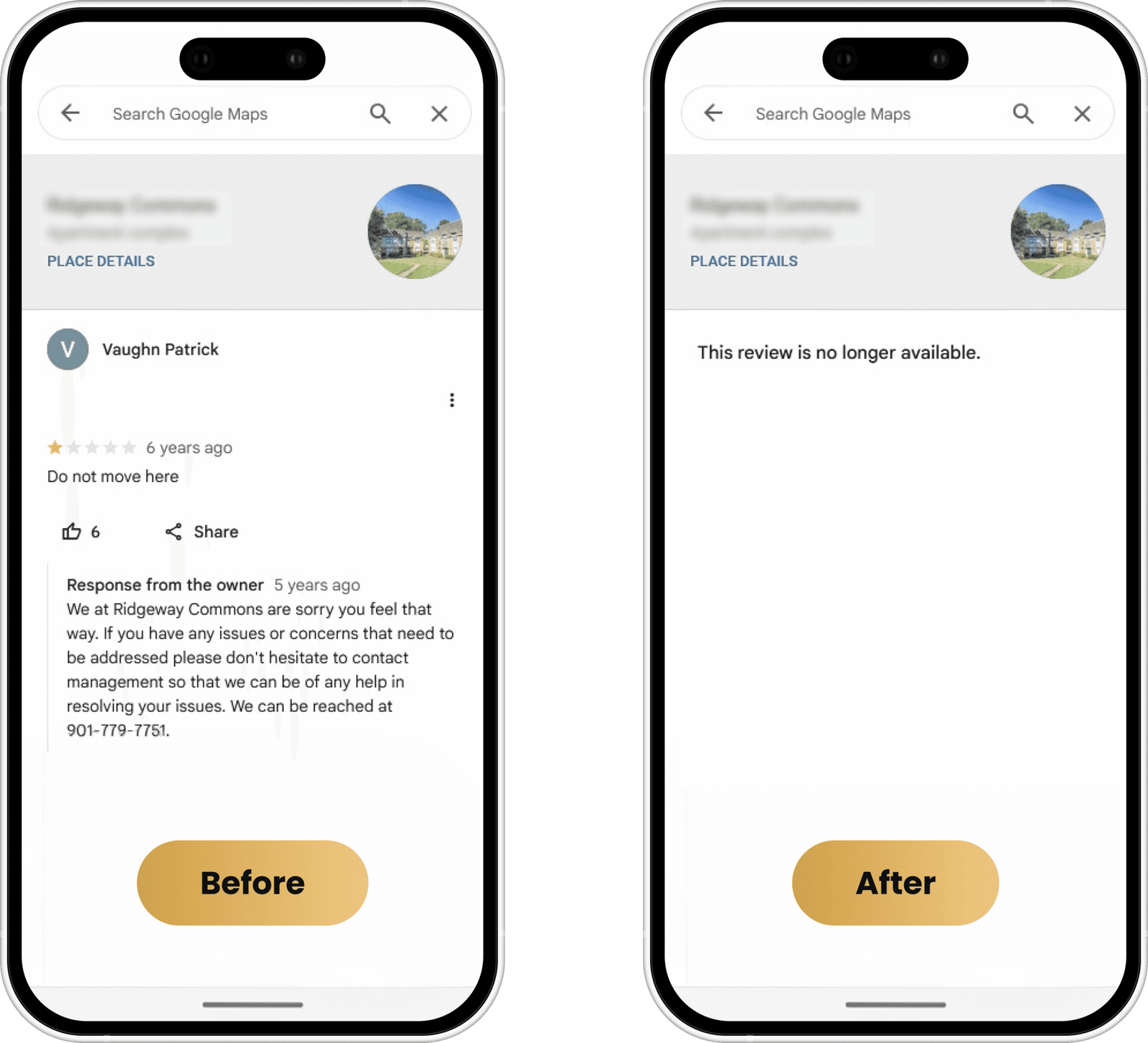
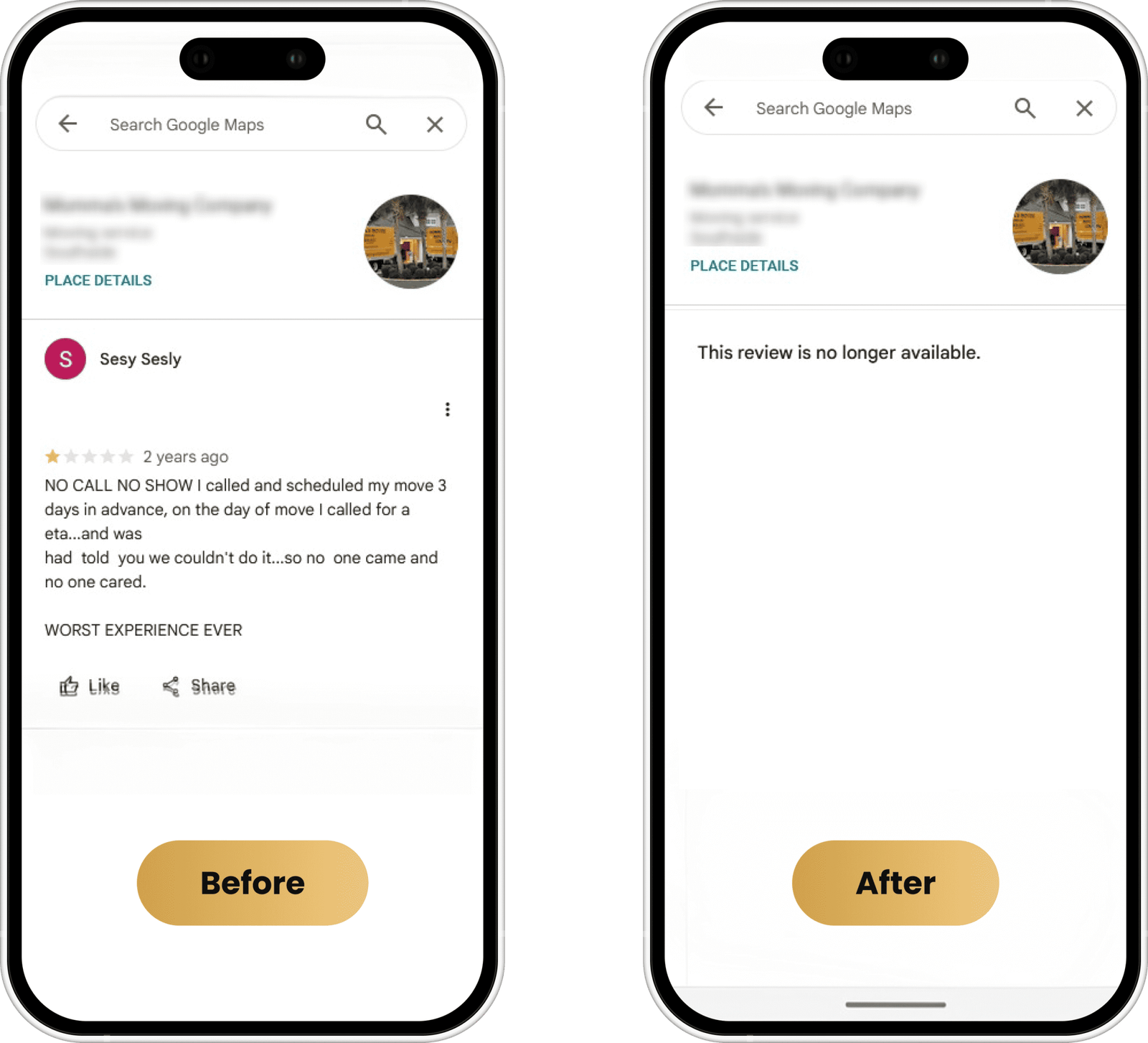
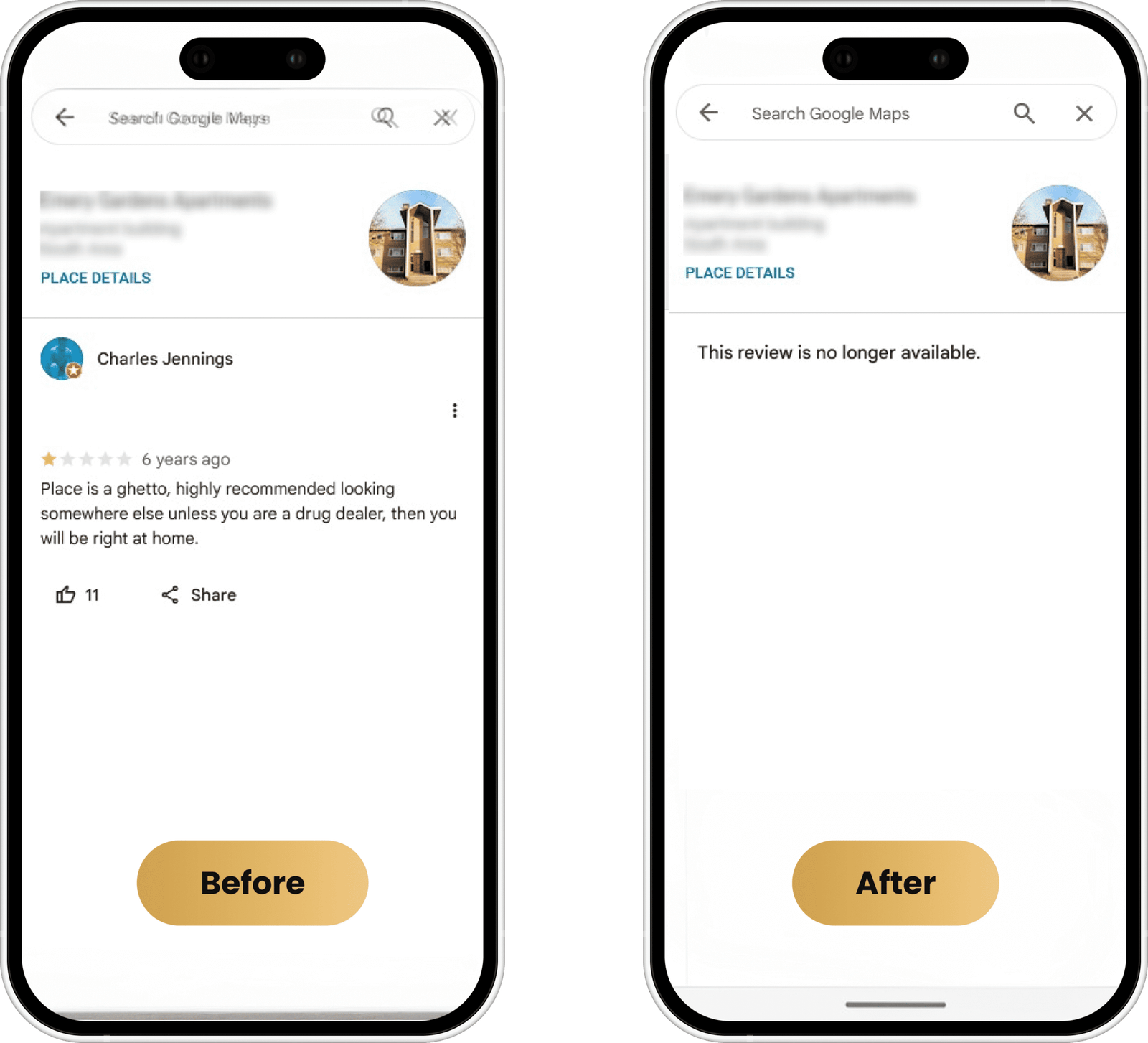
A look at real cases, the account behaviour behind each one, and the removal that followed.
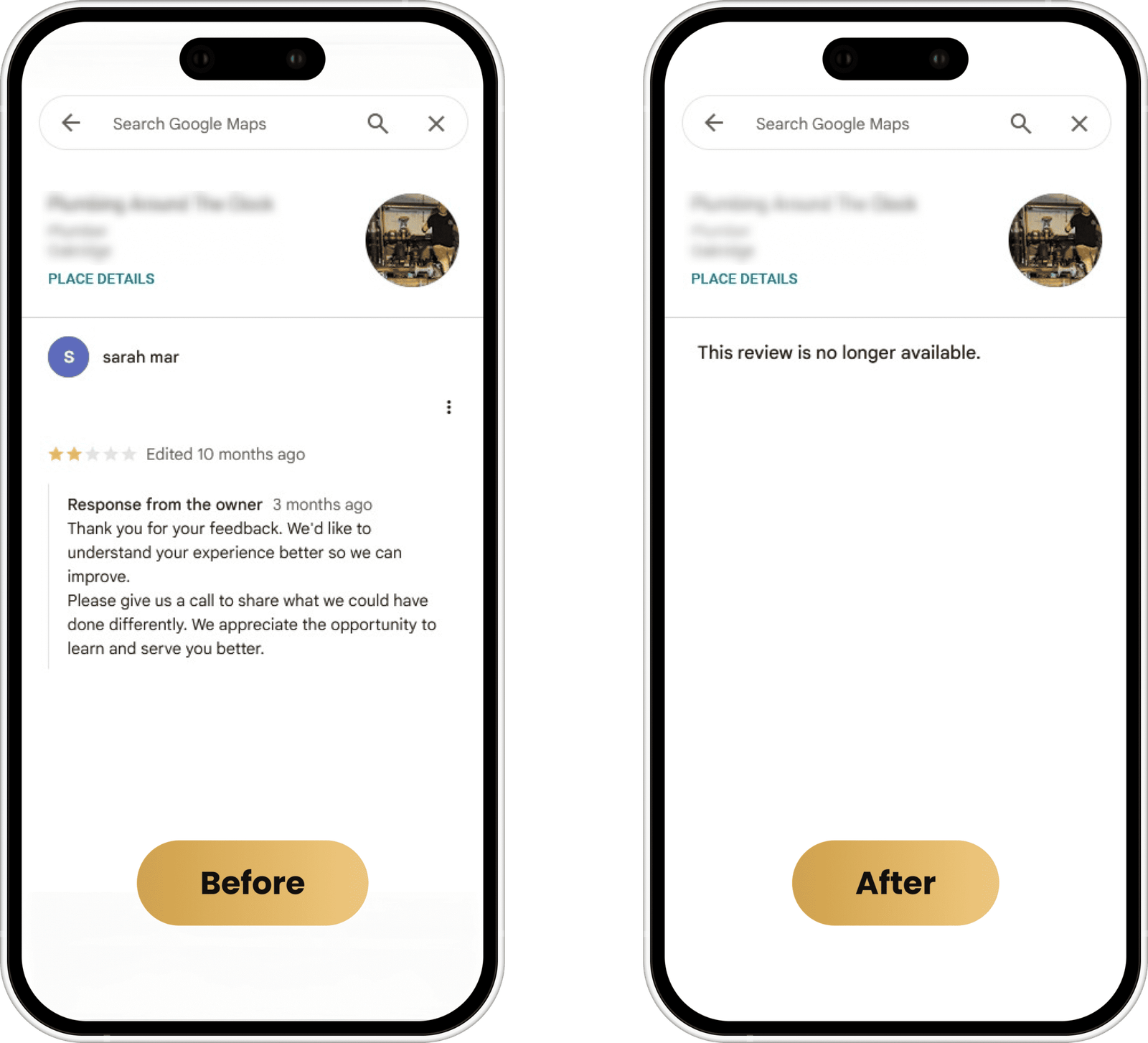
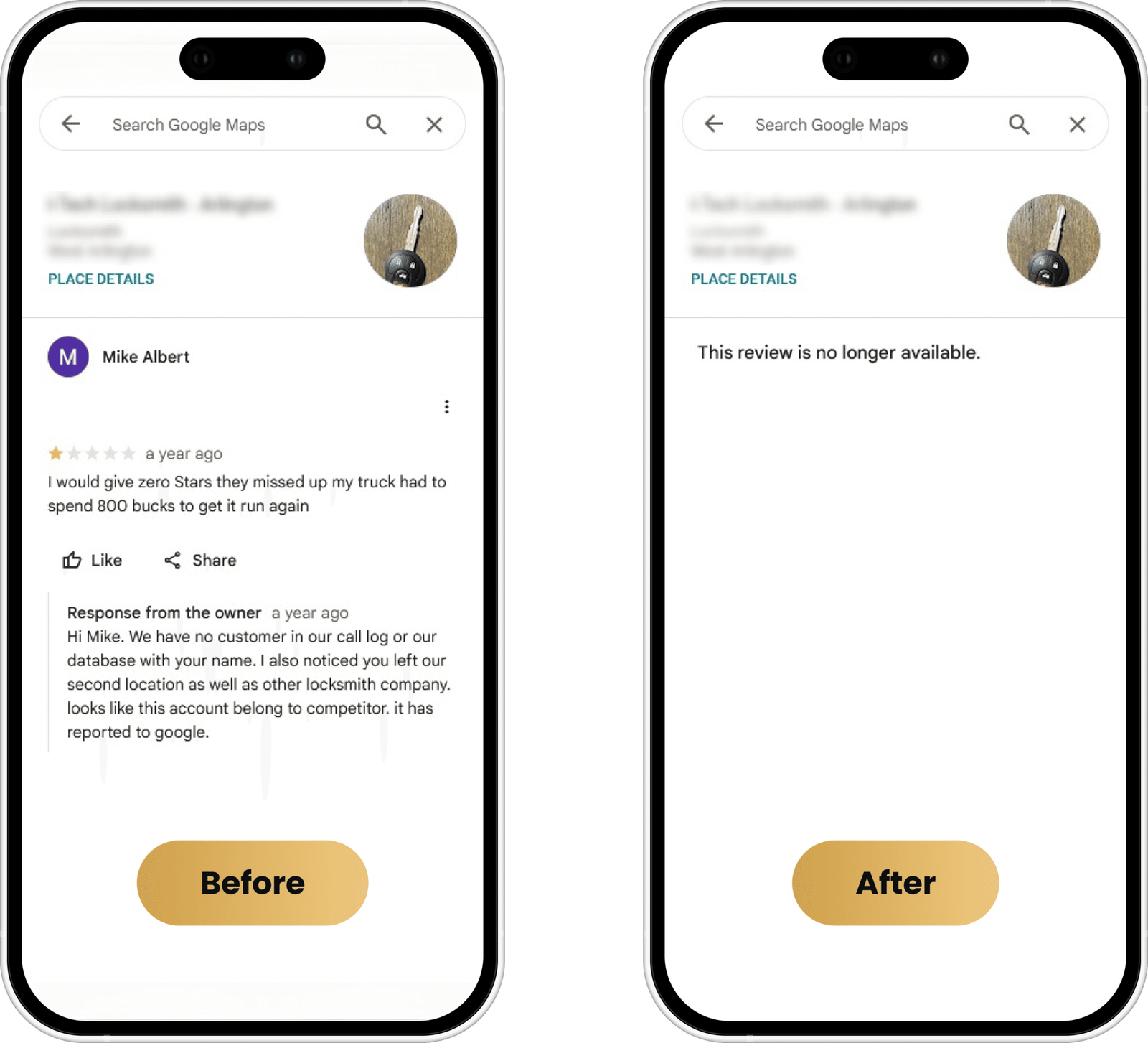
Bidding here is competitive, and procurement teams search your name first. A fake safety complaint is a cheap way for a rival to shorten your shortlist.
Crews rotate and jobs get subcontracted, so a review sometimes describes work actually done by a different outfit with a similar name.
A brutal weather week brings real complaints, and that flood makes it easy for a fake one to hide among them.
High invoice values, high emotion, and occasionally a reviewer profile that turns out to belong to nobody at all.
The review describes a procedure your clinic doesn't even offer, or names a practitioner who's never worked there.
Dense competition and thin margins, with clusters of unfair one-stars arriving in suspiciously tight windows.
With a smaller total review count, one planted negative review hits far harder than it would for a business with hundreds diluting it.
Reviews from people who were never actual clients, often about an incident on the road rather than any service provided.
Saying "that never happened" is just your word against theirs. Saying "this account was nine days old and reviewed three unrelated competitors that same evening" is something Google can actually verify.
One suspicious review is easy to dismiss. Six sharing the same signature is a coordinated attack, and Google treats that very differently once it's laid out clearly.
Google can see the account. Only you can prove there's no matching job on your end. Combining both is what actually makes a case work.
The public flag button asks for a category and one sentence. It never asks for account history, which is why most self-filed reports never contain the evidence that would have won.
Not every bad review is fake, and we’d rather rule things out honestly than sell you a case we already know won’t work.
If a review carries none of these and genuinely came from a real customer, nobody can get it removed, and we’ll tell you that plainly during the audit, not after you’ve paid.
Accounts With No History
Created recently, one review, nothing else at all.
Several negative posts within minutes of each other, often across multiple businesses in one industry or area.
Near-identical review text sitting on several unrelated companies at once.
A link, a phone number, or a competitor's name embedded in the review itself.
Named staff, personal abuse, discriminatory content, or threats rather than any comment on the actual service.
A profile connected to a former employee, a rival owner, or someone with an ongoing dispute against you.
"I've never been a customer of this business, but I would not recommend them to anyone in Alberta. Stay away from this company."
"Don't hire this company. I offer better services at lower prices. Visit my profile or contact me directly for a quote."
"This company is dishonest and should be avoided. I've never used their services, but people across Alberta should stay away from them."
We gather everything public about the reviewer's account and map it against the timing of the post and any related reviews on other listings.
The findings become a formal submission naming the specific policy clause being broken, with every piece of evidence attached, including whatever your own records confirm.
It goes through Google's official reporting channels only, followed up on and escalated properly, rather than submitted once and left to die like most self-filed reports.
That's the whole ask to start. No account access, no passwords.
When we identify a suspect review, we ask you to confirm whether a matching job or invoice exists. Usually about ten minutes of work.
Nothing gets filed without your sign-off, and you can drop any case at any point.
Every submission, response, and escalation is dated clearly. No need to ask us for updates.
A removed review is gone entirely from the calculation, not buried under newer posts.
For B2B operators across Alberta, this is often the whole point. The buyer checking your name finds a clean profile instead of a fabricated red flag.
Once planted reviews come down and monitoring is running, repeating the exercise simply isn't worth it for whoever tried it.
Even when a review doesn't come down, you still know exactly who's been posting about your business and how often.
Most agencies respond to reviews and push for new ones to dilute the bad. Useful, but it doesn't remove anything. This is a different job entirely.
The full account analysis goes straight to you, so you can check it yourself rather than take our word for it.
No monthly fee for effort. You pay per review that comes down, and nothing at all when a case fails.
Official channels only. Flagging networks and bot services are exactly how some businesses lose their whole listing, and we won't go near them.
If the trace comes back clean and the reviewer genuinely looks real, you're told exactly that, at no cost.
Most account traces finish within a day or two of getting your profile link.
You’ll get the full account analysis, the specific policy clause it breaches if there is one, and a straight answer on whether it’s genuinely winnable. In writing, free, with nothing owed if you decide to walk away.
Leading reputation management and digital growth agency trusted by 900+ clients worldwide.
© 2026 Erase Trax. All rights reserved.