
You’ve probably already tried this yourself. Found the flag button, ticked “fake or spam,” typed out why the reviewer was never actually a customer, and hit submit.
A few days later, a generic reply landed in your inbox. Doesn’t violate our policies. No follow-up, no explanation, just a form letter closing the door on a review that was never fair in the first place.
Here’s why that happens. Your report went to an automated system comparing one unproven claim against one already-published review. Nothing tips the scale either way, so nothing changes.
That’s the gap we work in. Erase Trax take reviews Google has already said no to, name the exact rule they break, attach real evidence, and refile them the way Google’s system is actually built to respond to.
Send us your profile and we’ll take an honest look, free.
All inquiries responded within 24 hours
Not a vague pitch. A proper list, sorted into three groups: removable, worth trying, and genuine. If a review is a real complaint from a real customer, we say so, and it doesn't make the removable list.
For anything we flag, you'll see the specific rule it breaks. If we can't point to one, we won't pretend a review counts as a violation just because it's harsh.
Reviewer account age, posting patterns, timestamps that don't line up, and your own booking records showing no matching customer. You see all of it before we submit anything.
Every filing, every reply from Google, every escalation, timestamped and visible. If a case stalls, you'll see exactly where and why.
For genuine complaints we can't touch, you still get a short note on how to respond publicly without making it worse. No charge for that part.
Once your profile's clean, we keep watching. A new fake or unfair review gets caught within days, while it's still worth fighting.
A look at real cases, including the rejection Google originally sent, and what changed once we got involved.
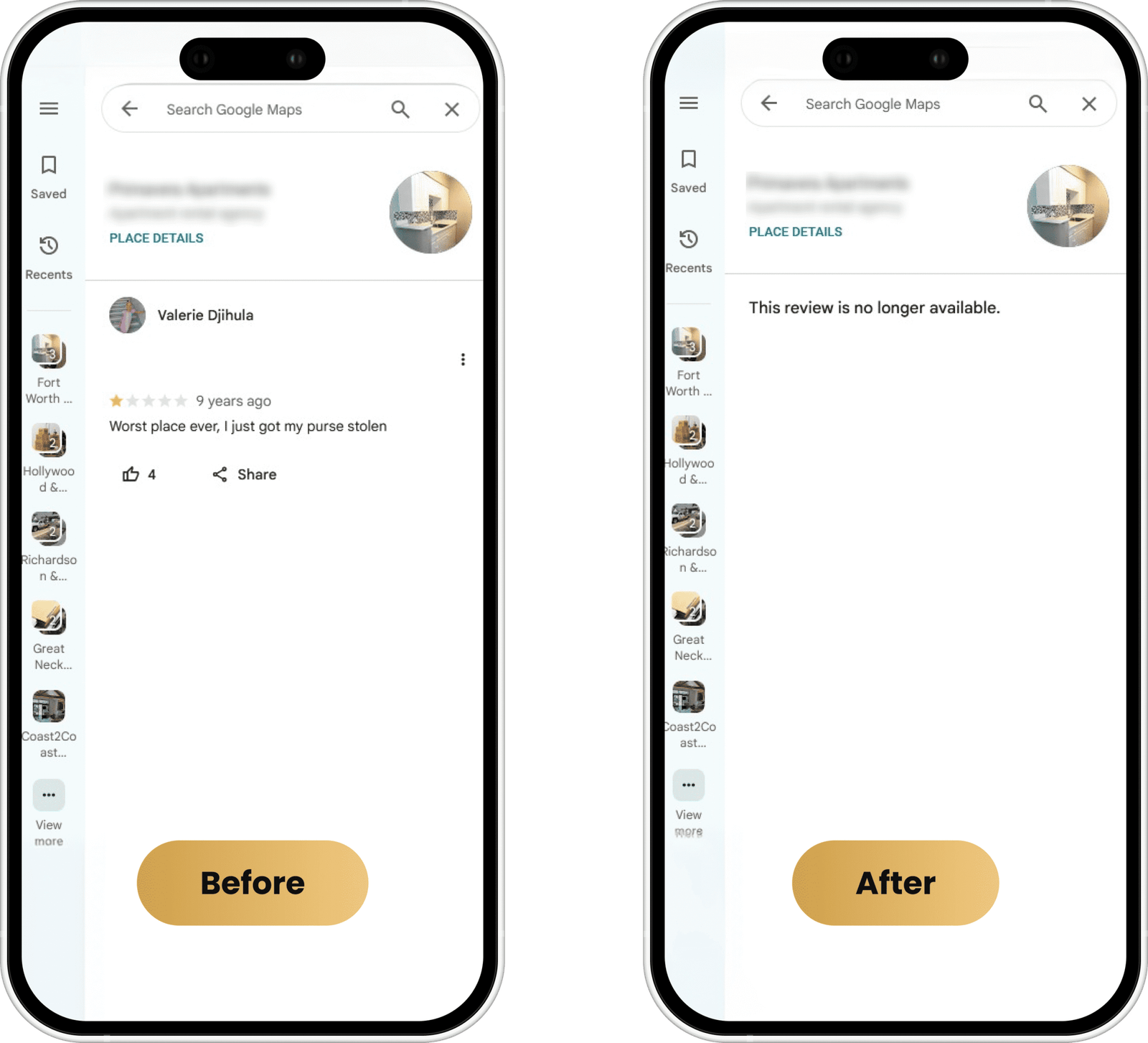
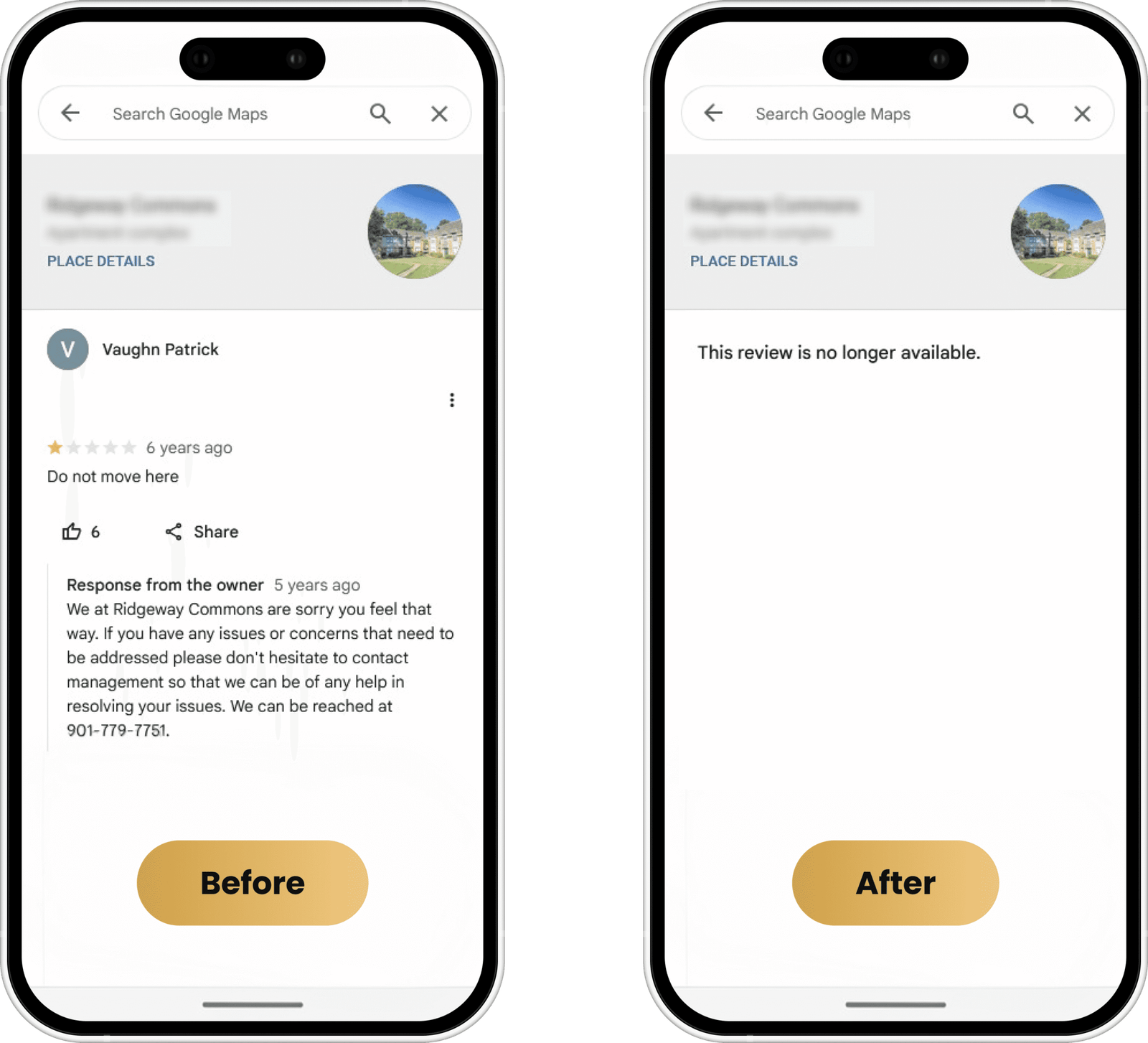
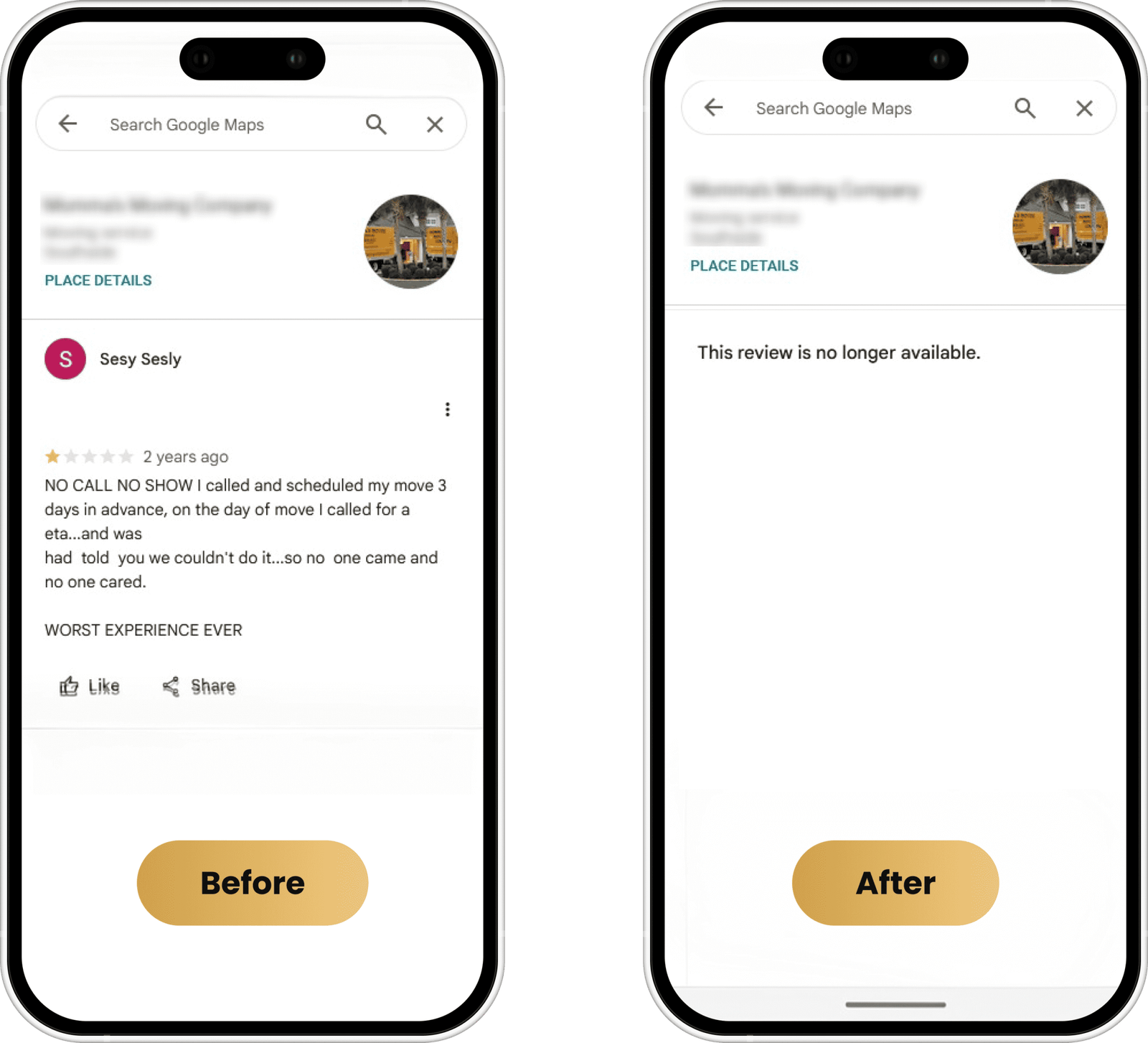
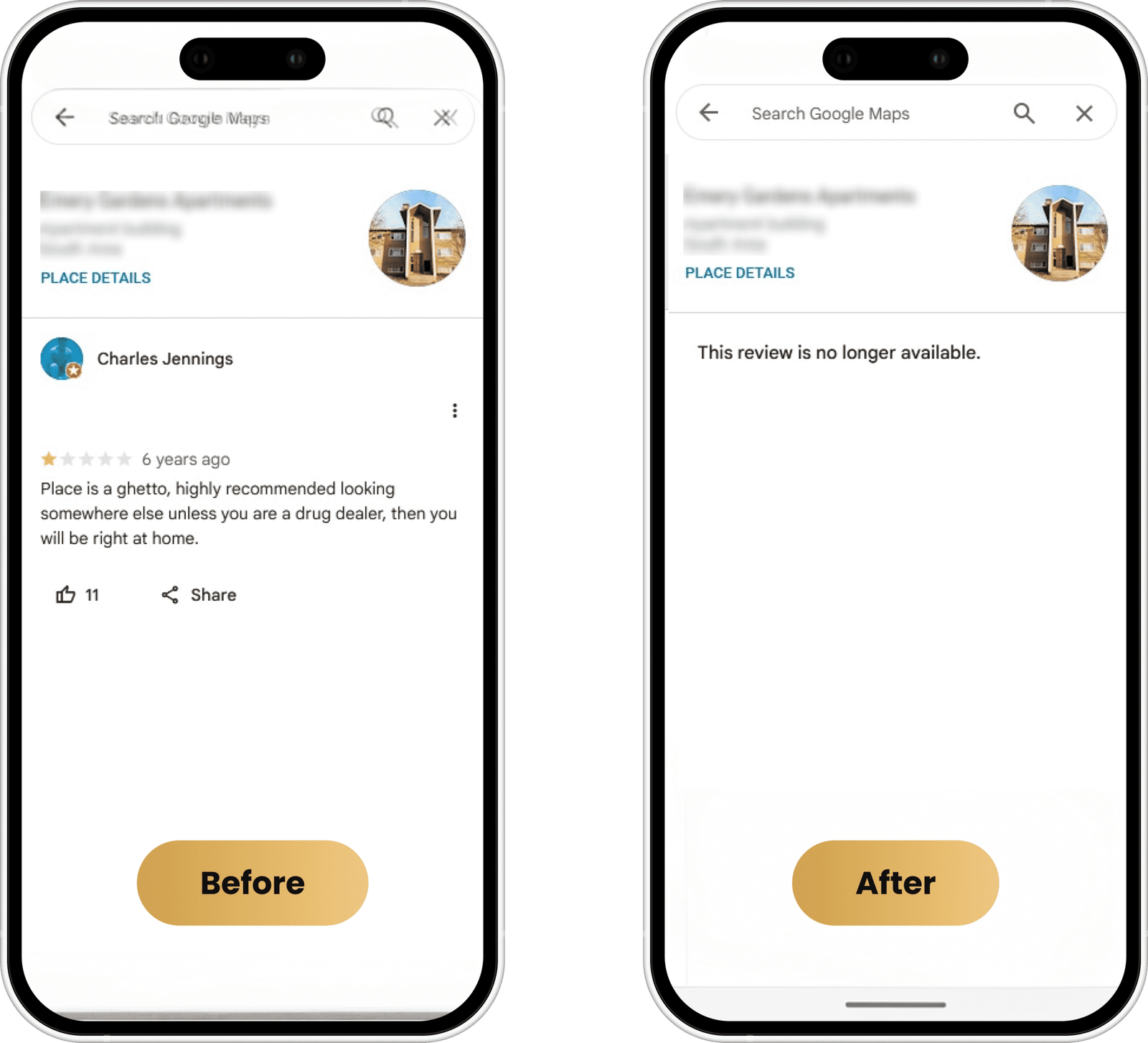
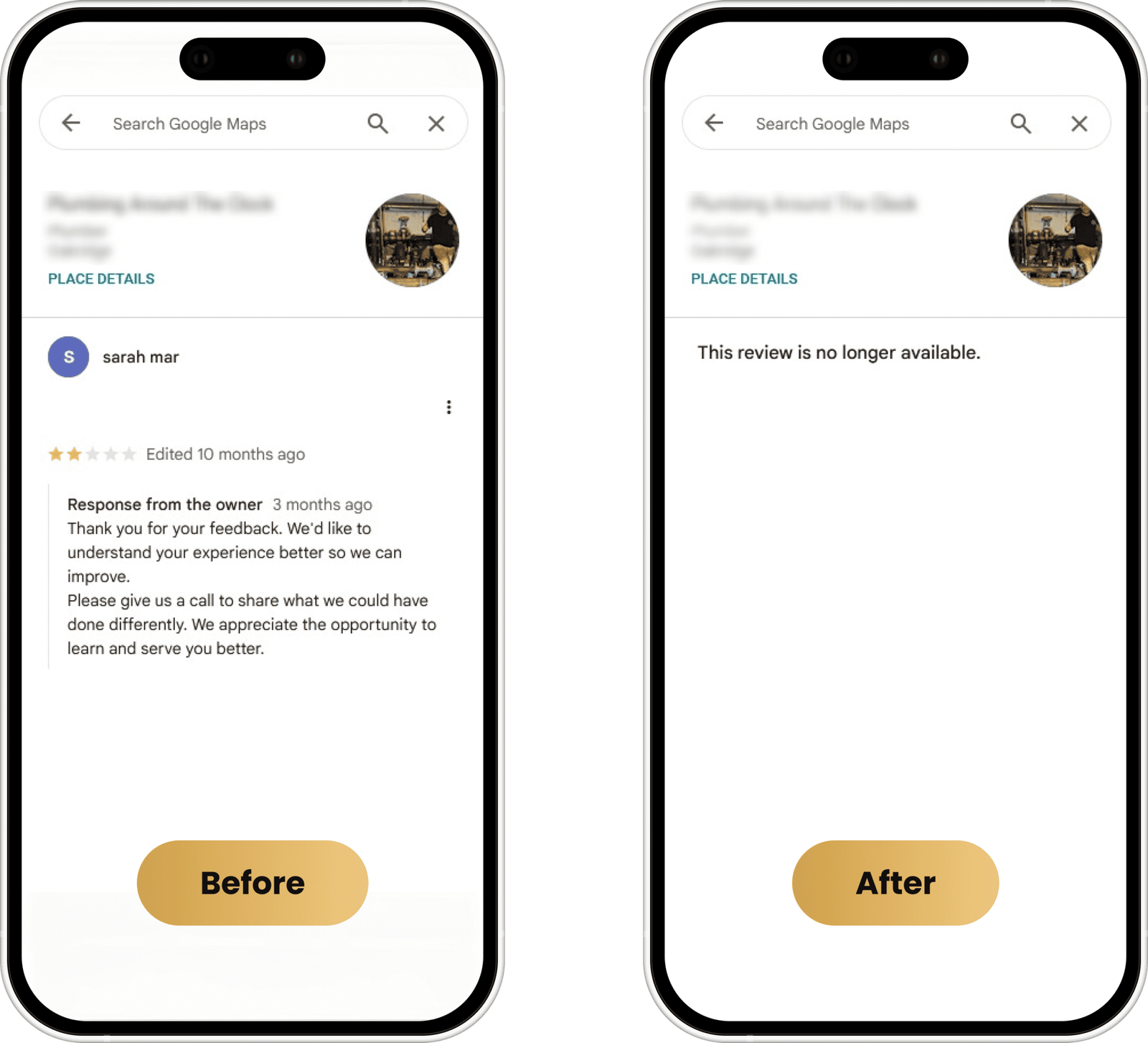
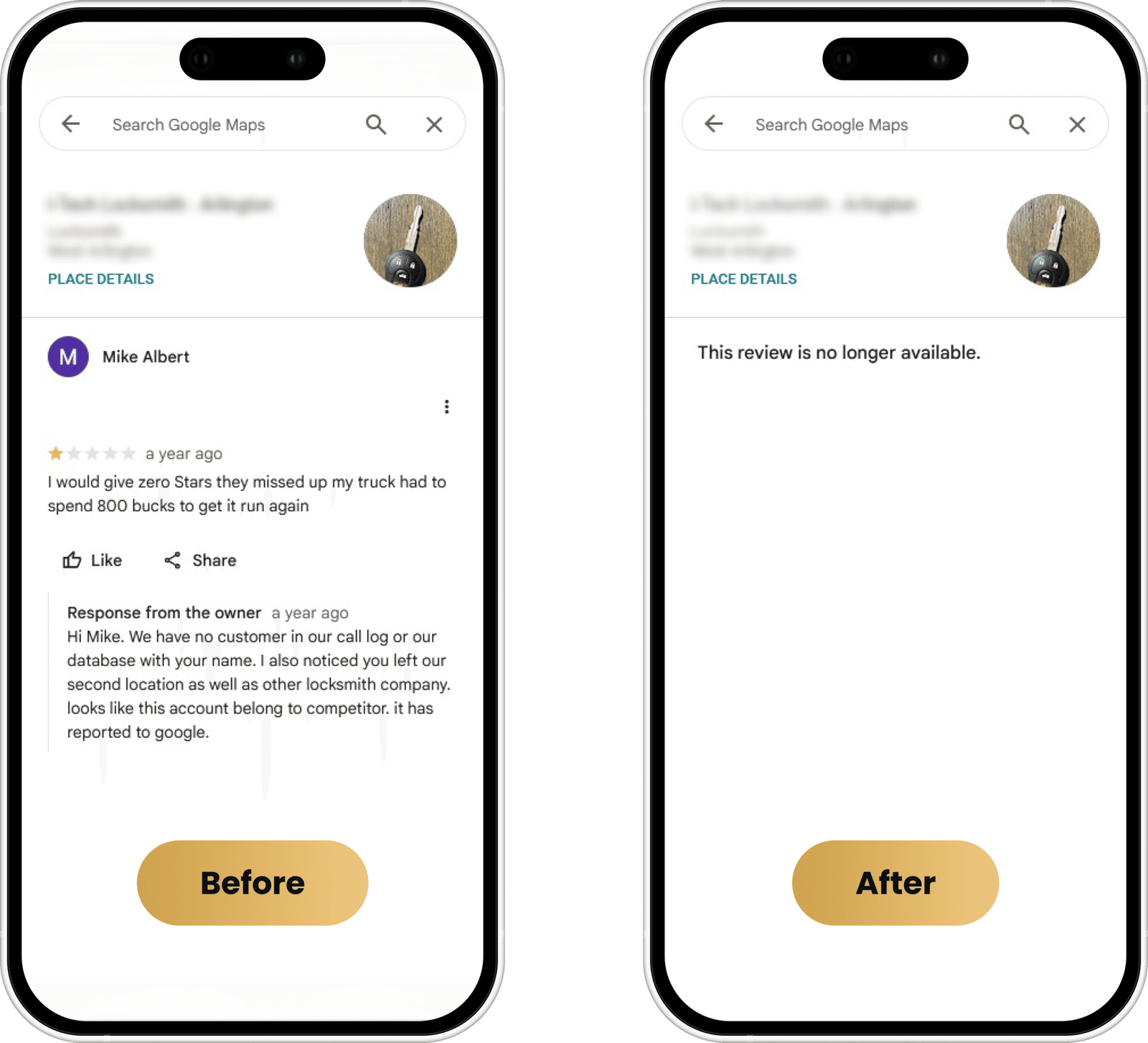
You've flagged the same review more than once, maybe from different logins, and got the same automated shrug back every time.
A cluster of one-star reviews landed over a single weekend, all from brand-new accounts with no history, and Google treated each one as unrelated instead of the coordinated attack it clearly was.
Someone with a grudge unrelated to your actual care keeps posting, and you can't publicly defend yourself without breaching confidentiality.
The review describes work you never did, at an address you've never been to, sometimes for a company that just happens to share part of your name.
The driver was late and the food was cold, and somehow the one-star landed on your profile instead of the delivery app's, where it belonged.
A messy departure, followed shortly by a review carefully written to look like it came from a customer instead of someone with a grudge.
A complaint meant for one branch is sitting, unfairly, on a different branch's profile.
Sometimes that's true. Often it just means nobody looked closely at the actual wording. Send it over and we'll tell you which one it is, honestly.
The reviewer says something happened. You say it didn't. With nothing else to go on, the system has no real reason to side with you.
That text box looks like it invites a full explanation, but it routes straight into a system built to sort categories, not read paragraphs.
Repeated flags on the same review don't strengthen your case. They can actually flag your reports as low quality.
Writing "this is fake" isn't a policy violation in Google's terms. Writing "posted by an account with no verifiable connection to the business" is. Same complaint, completely different outcome.
Google’s test is narrower than most owners expect. It’s not about whether a review is untrue or unfair. It’s about whether it probably breaks a specific rule.
If a review falls outside all of these, nobody can remove it, and anyone claiming otherwise is charging you to resubmit the same form you already filled in.
No real connection to your business
The reviewer was never a customer, and there's a paper trail proving it.
Clustered posting, brand-new accounts, or a sudden run of bad reviews right after a dispute with a competitor.
Promotional text, phone numbers, or the same block of text showing up on several unrelated listings.
Named staff, personal abuse, discriminatory language, or threats.
Political rants, complaints meant for a different business, or something that never happened on your premises.
Former employees, direct competitors, or anyone who benefits from your rating dropping.
"I've never used this business, but I would definitely stay away from them. Terrible company and terrible service."
"Don't use this company. I can provide better services at a lower price. Visit my profile and send me a message for details."
"This business is a scam. I've never been a customer, but everyone in British Columbia should avoid this company."
Your complaint gets translated from "this feels unfair" into the exact clause Google enforces. This step alone is usually the difference between a rejection and a removal.
Booking systems, invoices, appointment records, and a close look at the reviewer's own account, so Google isn't just weighing two competing statements anymore.
Rejections get reassessed and pushed through escalation routes well beyond the public flag button, which is exactly where most self-filed reports quietly die.
Just your Google Business Profile URL. No account access, no passwords.
Every review sorted clearly, with our reasoning for each one. You can stop here and it hasn't cost you anything.
You make the call on every case. Nothing gets filed without your sign-off.
Submission dates, Google's replies, and every escalation logged in real time. You'll know a review is gone before we ever have to email you.
A successful removal isn't buried lower on the list. It's gone from your average entirely.
Review signals feed directly into local search, so recovering even a fraction of a star can mean recovering a spot in the map results.
People who read that review and quietly chose someone else stop doing that. You won't see it happen, but your enquiries will tell you.
If a competitor was behind it, a successful removal paired with ongoing monitoring makes a second attempt far less worth their effort.
You could, and it costs nothing but time. If three attempts have already failed, a fourth from the same account is the least likely to change anything.
It would be, if the button were the actual mechanism. The real mechanism is the evidence and the named policy clause, neither of which the public flag form gives you room for.
We don't take payment upfront. Failed cases are billed at zero, no exceptions.
Everything runs through Google's official channels, logged with dates you can check yourself. Bot flagging and fake reporting rings get listings suspended, the opposite of what you're paying for.
Sometimes that's genuinely correct. Send us the review and we'll tell you which it is, free, in writing.
We’ll tell you which policy clause it breaches, whether we think it’s actually winnable, and exactly what evidence the case would need. In writing, at no cost, with nothing owed if you decide not to go ahead.
Leading reputation management and digital growth agency trusted by 900+ clients worldwide.
© 2026 Erase Trax. All rights reserved.